

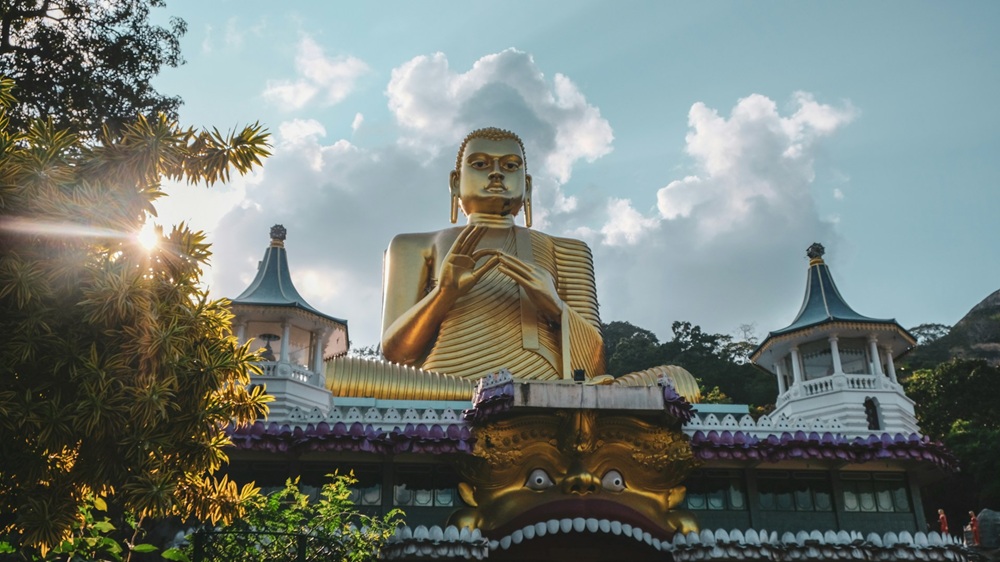

If you are searching for places to visit in Sri Lanka, Dambulla Cave Temple should definitely be on your list.
About Dambulla Cave Temple
Dambulla Cave Temple is Sri Lanka’s one of the most famous cultural attractions. Also called the Golden Temple of Dambulla, this UNESCO World Heritage Site is known for its five ancient cave shrines, colourful wall paintings and more than 150 Buddha statues.
It is both a historic monument and an active Buddhist place of worship, so visitors can experience centuries of Sri Lankan art while seeing a temple that remains important to local devotees.
The history of this temple dates back to the first century BCE. According to tradition, King Valagamba sheltered in these caves while he was away from his throne. After regaining power, he developed them into a temple. Later kings added statues, paintings and decorations, creating the remarkable complex visitors see today.
The caves stand high on a granite rock, so reaching them involves a climb, but the views from the top are part of the experience.
Dambulla cave temple entrance fee for foreigners
Sri Lanka Tourism currently lists the Dambulla Cave Temple entrance fee for foreign visitors as USD 10. Check the current price at the official ticket counter before your visit.
Foreign visitors should purchase their tickets at the designated office near the Golden Temple before climbing to the cave shrines. Do not walk all the way up without checking where to buy your ticket, as you may have to return downhill. Keep your ticket with you during your visit.
Dambulla cave temple entrance fee for locals
Sri Lankan visitors generally pay a much lower admission fee than foreign tourists. Some travel guides quote around LKR 100 for locals, but an up-to-date official local ticket price could not be independently confirmed. Local visitors should check the amount at the entrance before travelling, particularly around public holidays or special religious events.
If you are visiting with relatives who are Sri Lankan citizens and others who hold foreign passports, ask the ticket counter about the applicable categories. Carry identification in case staff need to confirm eligibility for a local or discounted ticket. Fees and access arrangements can change, so it is sensible to have some Sri Lankan rupees available.
Location
Dambulla Cave Temple is in Dambulla, in Sri Lanka’s Matale District, within the Cultural Triangle. It is a convenient stop for travellers exploring Sigiriya, Polonnaruwa or the journey between Kandy and the north-central part of the island. The Golden Temple and its large golden Buddha statue are easy landmarks to recognise from the main road.
You can reach Dambulla by private car, taxi or public bus from nearby towns. From the entrance area, visitors walk uphill on stone steps to reach the cave shrines. The climb can feel demanding in the heat, so wear comfortable shoes and carry drinking water.
Opening times
The visiting hours are between 7:00 am to 5:00 pm, and its heritage-site ticket counters generally operate during the same hours. Check the latest opening information before setting off, as religious observances or site arrangements can occasionally affect access.
Arriving early gives you more time to explore without rushing. Plan to buy your ticket before beginning the climb, and avoid arriving close to the closing time. Dambulla is a working temple, so visitors should dress respectfully, covering their shoulders and knees. You will also need to remove your shoes before entering the sacred area. Socks can be helpful when the stone surfaces are hot.
Things to see
The main attraction is the series of five cave shrines. Each has a different collection of statues and paintings, so take time to visit them all rather than stopping at the first cave. The first cave, Devaraja Viharaya, contains an impressive reclining Buddha carved from rock. Its size and the atmosphere of the small shrine make it a memorable introduction to the complex.
The second cave, Maharaja Viharaya, is the largest. It contains dozens of Buddha images and detailed paintings covering its walls and ceiling. Look carefully at the patterns and religious scenes, which reflect different periods of Sri Lankan history. The third cave, Maha Alut Viharaya, is associated with the Kandyan period and is known for its colourful later paintings. The fourth and fifth caves are smaller but add to the variety of statues and artistic styles.
Outside the caves, enjoy the wide views across the surrounding countryside. At the bottom of the site, the large golden Buddha statue is another striking sight. Remember that these are sacred spaces: speak quietly, follow photography instructions and avoid touching paintings or statues.
Best time to visit
Early morning is usually the best time to visit Dambulla Cave Temple. The climb is more comfortable before the strongest heat, and the site may feel quieter before tour groups arrive. Aim for around 7:00 am to 9:00 am if your itinerary allows. Late afternoon can also be pleasant, but leave enough time to buy tickets, climb the steps and see all five caves before closing.
You can visit the temple throughout the year. Rain can make the steps slippery, while sunny days can make the climb hot. Bring water, wear shoes with good grip and use sun protection. If you are visiting on a full-moon Poya day or another important Buddhist holiday, expect more worshippers and allow extra time.
For a relaxed day, combine Dambulla with another nearby attraction only if you have enough time. Sigiriya is a popular pairing, but both places involve walking and climbing. Visiting Dambulla first thing in the morning is a practical way to avoid doing the temple climb during the hottest part of the day.
Dambulla Cave Temple is worth visiting for its ancient Buddha statues, remarkable murals and views over the surrounding landscape. Plan your tickets in advance, arrive early and allow time to explore each cave respectfully. Whether you are travelling through Sri Lanka’s Cultural Triangle or visiting Dambulla for the day, the temple offers a memorable look at the country’s Buddhist heritage.

Editorial Staff at Ceylon Empire Travels are Specialist in Sri Lanka Travel.


